
How does a pagan wedding work?
When you have every citation in your pocket, will the magic still come to call?

Hello friend!
I’m writing this week from Vilnius, Lithuania, where I’m visiting for a week to learn a little something about pagan Lithuanian weddings. I’m training to be a wedding celebrant, and if you know me, you know I like to do research excursions, and compare approaches to make the most sincere, but also best informed offerings that I can.
paid subscribers scroll down for the audio version of this letter, read by me!
So naturally, I came back to a place I love to be and research both, and that is Lithuania.
Lithuania was famously the last nation in Europe to convert to Christianity, so accounts of what was going on in pre-Christian times are more detailed than in other places, and many folkloric practices and folksongs with roots in that time period remained in popular use into the 19th century.
Depending on who you ask, you might hear that Lithuanian national identity itself still carries the spirit of paganism. But in this modern, mostly Catholic country, it definitely depends who you ask!
What does a pagan wedding look like?
The day before yesterday I had the good fortune to be permitted to observe a pagan wedding held by Inija Trinkūnienė, the high priestess of Romuva, the largest pagan religious group in Lithuania, one which has recently won a long battle for official state recognition — and with it, the right to perform legal weddings.
I should mention before I share about my experience, that a wedding held by Romuva is just one interpretation of how a pagan wedding can happen. There are no set rules for pagan weddings in general, and no detailed description exists of a pre-Christian wedding ceremony in northern Europe, as far as I am aware — unless we count Thor’s sham wedding in the Old Norse poem Þrymskviða when he dressed in drag as Freyja, after Loki promised she would marry the jötunn (giant) Thrymir in exchange for Thor’s stolen mjölnir.
Even then we only get the faintest picture of what a wedding might have looked like, and that it involved blessings with the mjölnir.
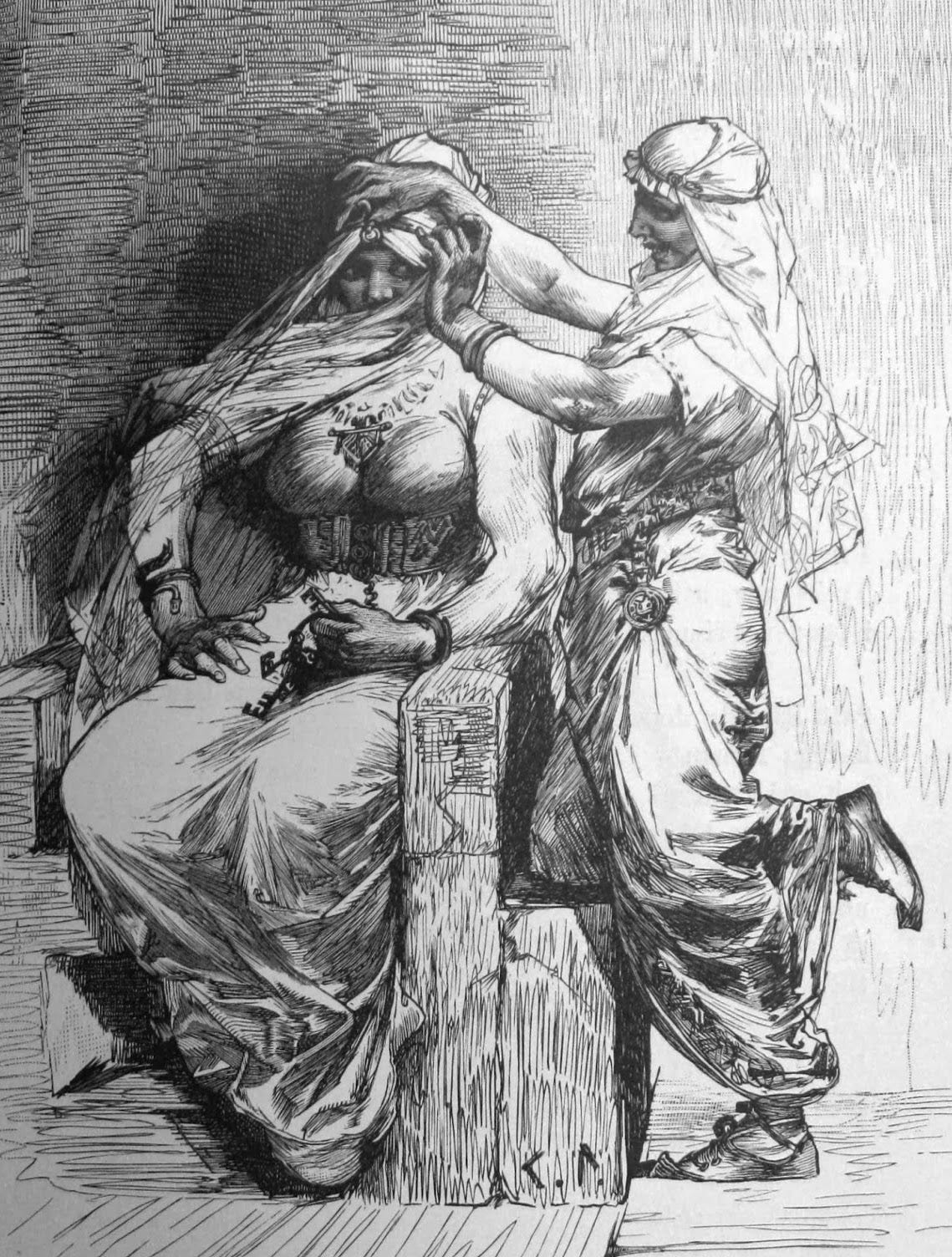
Nevertheless, there is copious folk tradition and a few brief references to ancient weddings, both in Lithuania and other Indo-European traditions, from which a person can assemble a ceremony with deep roots and modern resonance.
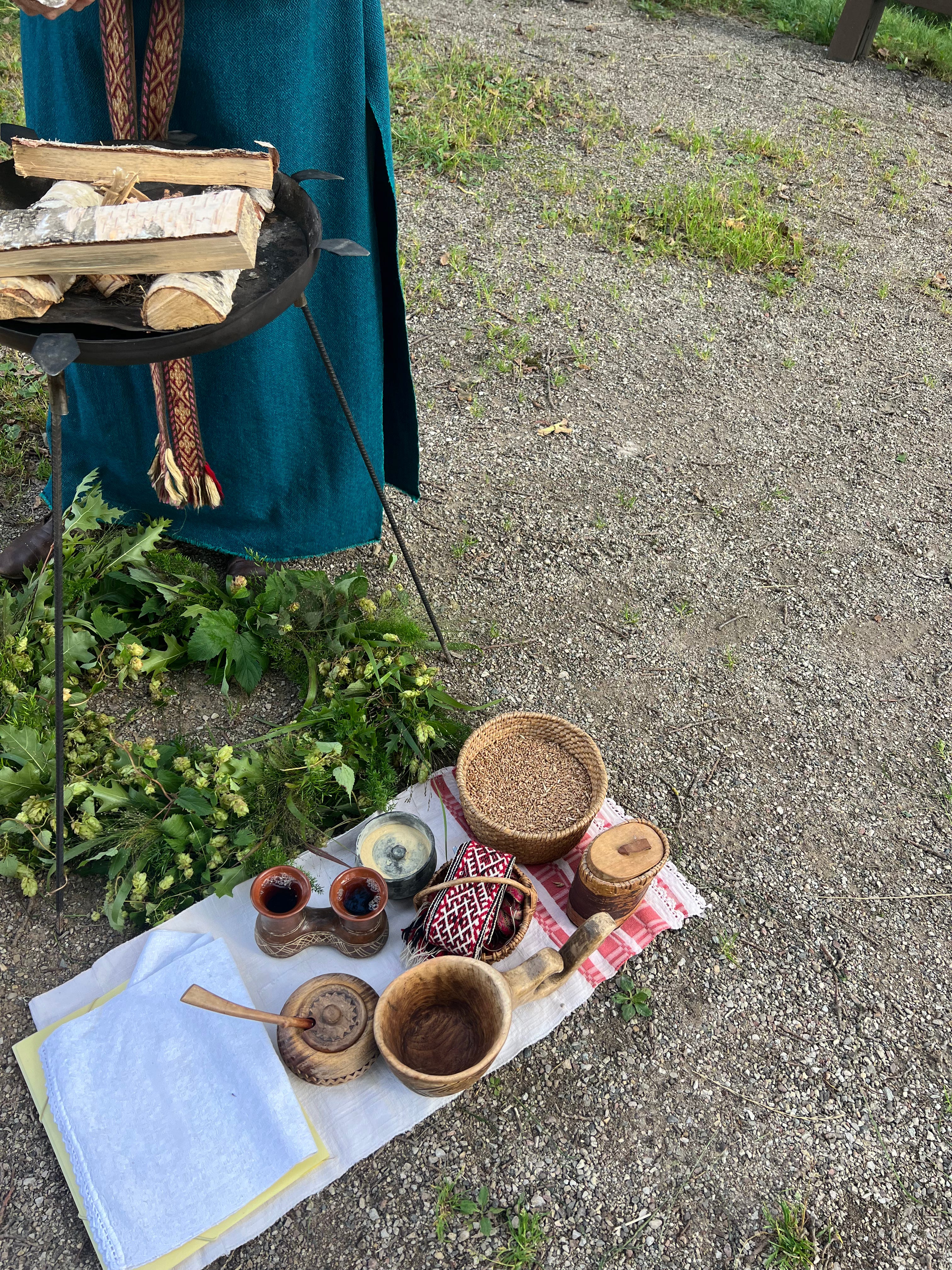
For the nerds: above are the ceremonial props used at the wedding, including the all-important central fire, salt to offer the fire, woven bands for blessing and wrapping the hands of the couple, wheat grains representing the earth goddess Žemyna, honey and mead for the couple to consume, and amber dust for offering to the fire.
Here's how it went:
The couple came in through an alley made of their relatives and friends, who held aloft woven bands, which are a part of Lithuanian traditional costume, and often include mythical symbols in their patterns. This is a relatively new tradition, I was told, but a pleasant one that helps mark out sacred space.
The priestess Inija, dressed in a mix of medieval garb and folk costume, as Lithuanian pagans tend to, started the ceremony by offering salt to the ceremonial fire while the friends and family of the couple formed a circle.
Throughout the ceremony, Inija invoked pagan gods: Gabija Ugnis, the goddess of fire, Žemyna, the earth goddess, Laima, the goddess of destiny (and luck and childbirth), and Perkunas, the thunder god.
A long woven band of that traditional sort was passed around the circle of friends and family, the couple exchanged rings, and the priestess wrapped their hands together with the band that had passed through the hands of the people.
The couple circled the fire three times while the gathered kin tossed wheat grains on them, embodying the blessing of Žemyna.
Songs are all-important in Lithuanian pagan rituals in general, and weddings are no exception. The priestess and the three musicians accompanying her sang hymns to the gods mentioned above, with beautiful traditional melodies, harmonies and re-paganized lyrics, accompanied by kanklės and a drum, inviting people to sing along in call-and-response.
The songs were my favourite part, and I did my best to sing along without making it too obvious I don’t speak much Lithuanian!
The final song they shared, Kur Sakuolalis Ten Geguitala, I was told, was for the couple themselves. It’s a song Inija said is unchanged from its folkloric context and connected by Romuva with the goddess Laima. That song describes a boy and a girl feeding one another honey and drinking beer from the same cup, in parallel with two birds — the hawk and the cuckoo, who alight on the same branch and share the branch’s berries and dew.
The ceremony ended with the couple feeding one another honey from the same spoon and drinking mead from a conjoined cup, which is a reconstruction of an ancient find from Lithuania.
Typically at a Romuva ceremony a larger ceremonial cup of mead or beer would also passed around the circle, and everybody would say their individual wishes for the couple aloud. At this wedding, folks offered their wishes by sprinkling amber dust into the fire, which makes beautiful sparkles in the air. Amber has been a traditional gift in the Baltic region and a valuable trade item since ancient times.
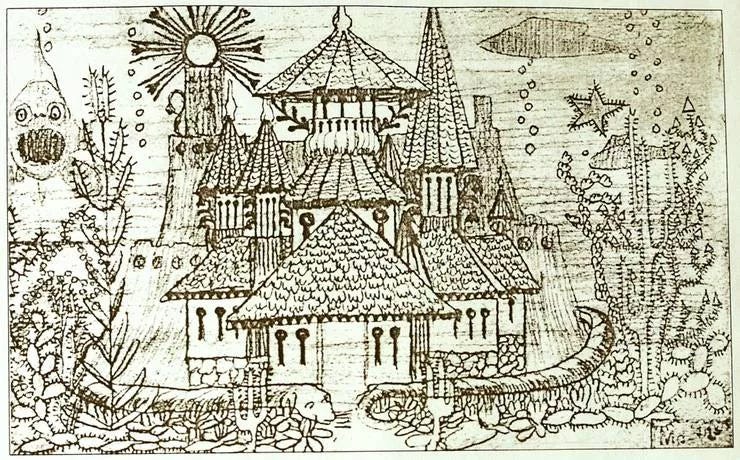
There is a Lithuanian folk tale about the origin of amber that tells how the goddess Jūratė, Perkunas’ daughter, lived in an amber castle under the sea. One day she fell in love with a fisherman, Kastytis, and married him. They lived happily in the amber castle together under the sea, until Perkunas, furious with her choice of mortal husband, hurled his lightning bolt at the amber palace, dashing it to pieces many of which still wash ashore to this day.
I was aware of some precedents for elements of this pagan ceremony in other indo-European traditions: ceremonial drinking is one many people will be aware of in the wassail tradition, and early Celtic poetry speaks of a bride bringing a drink to her husband-to-be. Scottish modern pagan weddings also often include a shared drink from a quaich, though records of the use of quaichs in Scotland date back only to the 16th century.
Walking around a fire a set number of times is a custom that remains in Hindu wedding rituals, which share the “indo” in indo-European, and also appear in 16th-century descriptions of Lithuanian pagan weddings in the form of the bride circling the hearth.1 These 16th century accounts also mention the tossing of grains, though this is before the wedding and with the bride’s arrival at her new home.2
Exchanging rings to symbolize a vow is an ancient tradition in many cultures, though I understand it did not come into fashion for both women and men to wear wedding rings until the Middle Ages (and even that is 500 years ago!)
It takes a lot of hard work and creativity to construct (or reconstruct) a pagan wedding ritual, and the end result is a negotiation between modern culture and ancient culture, individuals and their families, even languages, as many traditions (especially songs) are hidden in the ancestral languages of cultures that have spread far and wide on the earth and forgotten those old words and the old songs with them.
Modern paganism frequently lends its adherents to feelings of vertigo. The historical facts we inherit about paganism are incomplete, nearly always biased, and the choices to make about which traditions to adopt, which to adapt, and which to invent anew seem endless.
It sometimes surprises native Europeans when I tell them just how many monolingual English speakers are deeply passionate pagans, as we know keenly the grief of finding ourselves adrift in modern global capitalism, and the abyss we sense as we gaze down toward the absent foundations of that worldview.
That’s not to mention that — vexingly — pagans around the world tend not to agree on how things ought to be done, especially politics. Indeed this is something I am often faced with in Lithuania in particular. Several of my friends here, who I met when they gave me gracious welcome as a solo researcher and sincere lover of tradition years ago, are vocally expressive of very different political views to my own.
And yet!
When you meet another pagan and you really get down to the core of what is calling you both to this path (and maybe you have a nice cup of mead together), facts and news items aren’t the main things you want to share with one another, after all. Yes, we want real living traditions, yes we wish we all agreed about politics (do we ever), but when you get down to it what brings us together is a feeling.
It’s a feeling of sacred longing.
Longing for a vision of ancient sun-dappled woods and the bright grandmotherly fire of warmth, the inborn recognition of the deep peace of snow, the eternal agreement between earth and sky, and the songs of the forest-dwellers — birds and ourselves, which weave between the worlds and make them whole.
Sometimes I get overwhelmed when I try to square the facts with the practices, when I try to find that one last book (usually in another language) that will lend roots to the magic branches waving in our many-hued rituals, when I wonder who is an authority and who is a charlatan and will people trust what I’m offering and after all, when I do offer a wedding, after I’ve researched it to the very bones, once I know exactly how it works, will I even believe in the ceremony anymore myself?
I started writing this post yesterday, and was so overwhelmed with such questions, I couldn’t finish.3 So this morning I let myself stay home and putter around the house instead of going to museums or even sacred sites, trying not to think about anything in particular, and finally while I was plating some eggs with buckwheat and lovely orange chanterelles,4 beets and rauginti kopūstai (sauerkraut) by a big lovely window overlooking every cathedral and sacred hill in Vilnius (thank you thank you thank you!), a thought ran through my head, completely unrelated to what I was doing, and immediately my shoulders relaxed and life felt more manageable.
Despite the fact a pagan celebrant is instrumental in planning a wedding ceremony, and indeed hosts and performs the ritual, I heard in my mind,
“the gods will marry them, not you.”
To my great relief, I remembered that is the job of the celebrant to invite the couple and their people and the gods into the same sacred space, so the gods can do what only they can, transform us all and bring us closer into the bosom of life.
Tonight I’ll observe a child blessing ceremony by Romuva, after which there will be a big equinox celebration on the hill where the most famous medieval (pagan!) duke Gediminas is said to be buried, at the centre of the city, above the sacred Vilnia river.
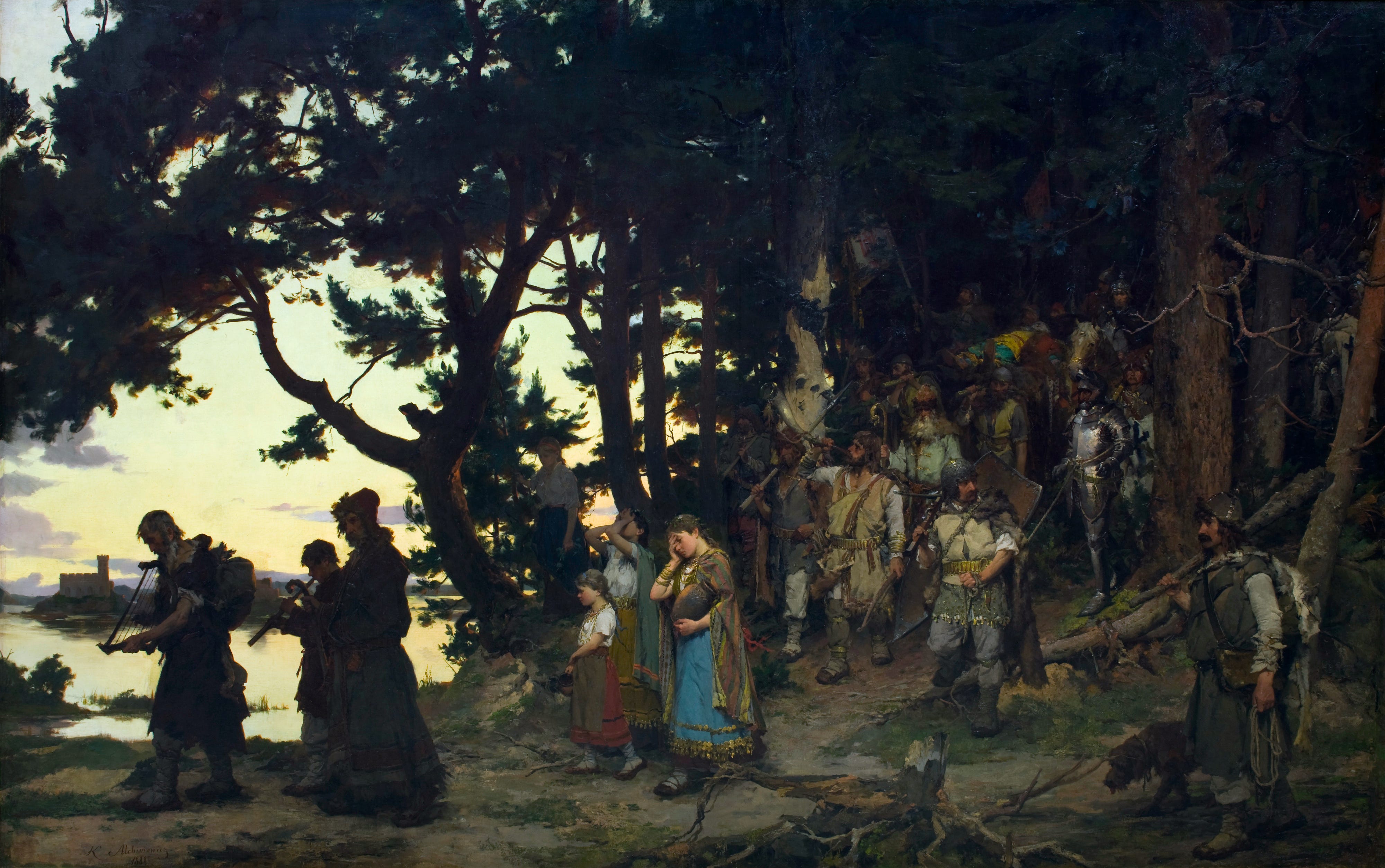
At the head of the procession in the above image you can see two musicians and the vaidila, pagan priest, all of which will be (in their current incarnations) in attendance with me this evening. I’m excited! It’s a blessing to be with other pagans in celebration, especially when the world feels so topsy-turvy. Time is still, as ever, a wheel. And here we stand on this point of it, together.
I’m wishing you very well this autumn equinox, at the end of the harvest season, with the first frost on the horizon here in the weeks to come. I will send my prayer out tonight in my heart and in song that you may receive all that you need from the earth, and feel the support of all that lies just beyond your everyday awareness.
Love,
Danica
PS: if you are a pagan wedding celebrant, or are simply having a pagan wedding (ideally in the UK), I would be very grateful to observe your ceremony during my period of study this year! Please contact me below or through my website if that’s you. 🧡
